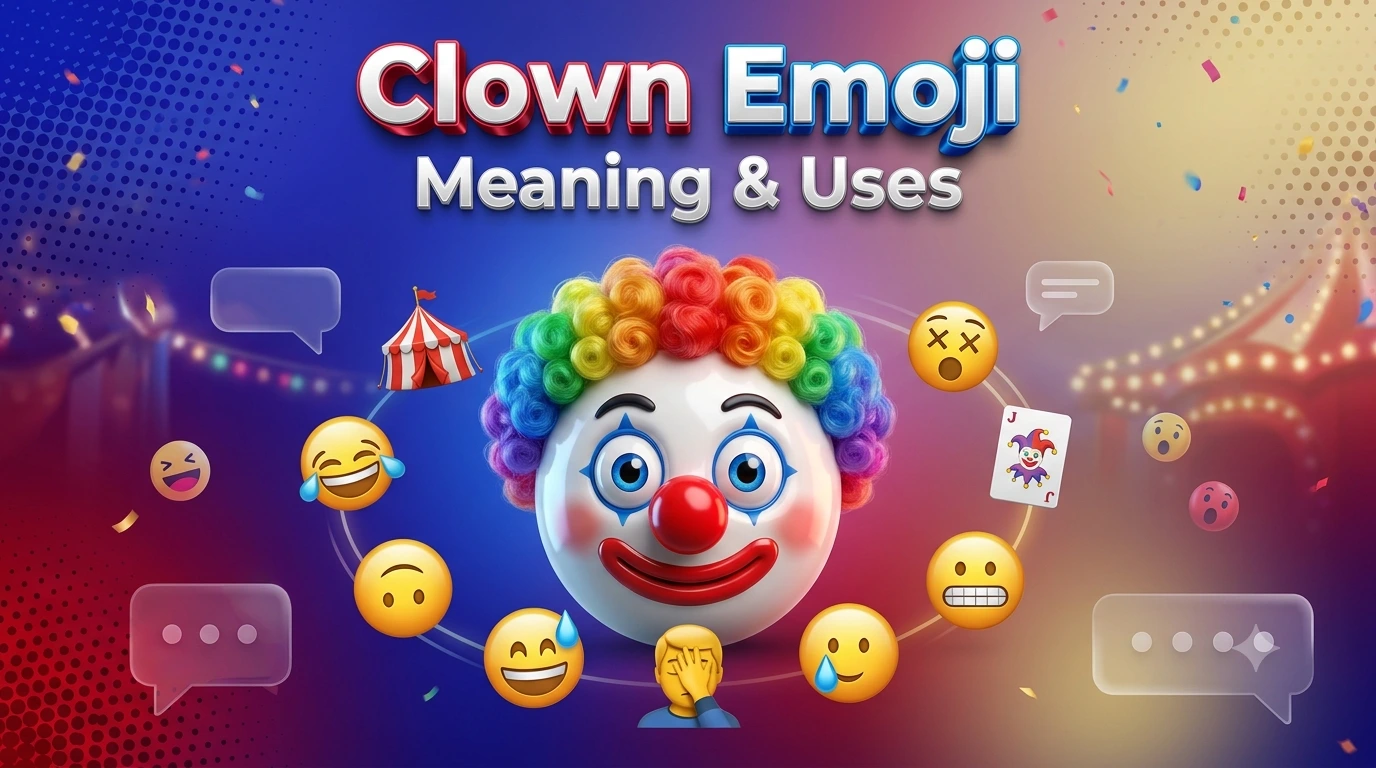
Clown emoji (🤡): A clown emoji represents foolishness, playful sarcasm, self-mockery, or someone acting silly or embarrassing themselves in a conversation.
Sometimes a single 🤡 says more than an entire sentence and not always in a funny way.
Have you ever seen someone reply with a 🤡 emoji and wondered whether they were joking, teasing, or calling someone out? The clown emoji has become one of the most recognizable symbols on social media. While it once simply represented a circus clown, today it carries many different meanings depending on the conversation and platform.
From playful jokes in WhatsApp emojis to sarcastic comments on Instagram emojis and viral TikTok trends, the 🤡 emoji is everywhere. In this guide, you’ll discover its different meanings, learn how to use it naturally, explore copy paste emojis, and understand why it’s one of the trending emojis 2026.
The 🤡 emoji isn’t just about clowns it’s about calling out funny, awkward, or embarrassing moments with a single tap.
What do Clown emoji mean?
The clown emoji (🤡) usually represents someone acting silly, foolish, or embarrassing themselves. However, its meaning changes depending on the situation, relationship, and tone of the conversation.
Here are the most common emojis used alongside the clown emoji family:
| Emoji | Core meaning | Misread as | Best used when |
|---|---|---|---|
| 🤡 | Foolish, embarrassing, self-mockery | Circus performer only | Joking about mistakes or playful sarcasm |
| 🎪 | Circus or chaos | Party | Talking about drama or ridiculous situations |
| 😂 | Uncontrollable laughter | Simple happiness | Something is extremely funny |
| 🙃 | Playful sarcasm | Being happy | Light teasing or awkward moments |
| 😅 | Embarrassed relief | Sweating from heat | Laughing at your own mistake |
| 🤦 | Facepalm or disappointment | Anger | Reacting to a silly decision |
Meaning and Examples
🤡 Clown Face
Meaning: Used to joke about acting foolish, embarrassing yourself, or calling out someone’s silly behavior.
Example 1: I really believed that rumor 🤡
Example 2: Guess I played myself again 🤡
🎪 Circus Tent
Meaning: Represents chaos, drama, or a situation that feels like a circus.
Example 1: This comment section is a circus 🎪
Example 2: Every meeting turns into this 🎪
😂 Face with Tears of Joy
Meaning: Showing uncontrollable laughter after something hilarious.
Example 1: That joke had me crying 😂
Example 2: I can’t stop laughing 😂
🙃 Upside-Down Face
Meaning: Expresses playful sarcasm or pretending everything is fine.
Example 1: Sure, everything is perfect 🙃
Example 2: Another Monday morning 🙃
😅 Grinning Face with Sweat
Meaning: Laughing after an awkward or embarrassing moment.
Example 1: I sent the message to the wrong person 😅
Example 2: That was embarrassing 😅
🤦 Person Facepalming
Meaning: Reacting to a mistake, poor decision, or obvious error.
Example 1: I forgot my keys again 🤦
Example 2: I can’t believe I did that 🤦
🥲 Smiling Face with Tear
Meaning: Feeling emotional while trying to smile through the moment.
Example 1: Finished the last episode 🥲
Example 2: Bittersweet memories 🥲
😬 Grimacing Face
Meaning: Showing awkwardness or second-hand embarrassment.
Example 1: That was uncomfortable 😬
Example 2: I wish I hadn’t seen that 😬
😵 Face with Crossed-Out Eyes
Meaning: Feeling overwhelmed or shocked by a situation.
Example 1: Too much drama today 😵
Example 2: My brain is done 😵
🃏 Joker
Meaning: Refers to someone being playful, mischievous, or acting like a joker.
Example 1: You’re always joking 🃏
Example 2: Nice prank 🃏
How to use clown emoji the right way
The clown emoji changes tone depending on where you use it. While the emoji itself stays the same, people interpret it differently across social platforms.
On WhatsApp, 🤡 is usually personal and playful. Friends often use it to laugh at themselves or tease each other after a funny mistake.
Example:
“I studied the wrong chapter for the test 🤡”
On Instagram, the clown emoji is commonly used in captions and comments to react to awkward moments, internet drama, or self-deprecating humor. It helps keep the tone light instead of sounding harsh.
Example:
“Me thinking I’d finish all my work in one hour 🤡”
On TikTok, 🤡 is often part of memes, ironic jokes, and trending videos. Creators use it to point out unrealistic expectations, embarrassing situations, or funny plot twists.
Example:
“When you ignore every red flag and still get surprised 🤡😂”
Do
- Use 🤡 to laugh at your own mistakes.
- Pair it naturally with 😂 or 🙃 for light-hearted humor.
- Keep the tone playful when chatting with friends.
- Use it to make jokes feel less serious.
Don’t
- Don’t use 🤡 to insult someone you don’t know.
- Don’t overuse several clown emojis in one message.
- Don’t assume everyone understands internet slang the same way.
- Don’t use it in formal or professional conversations.
Best clown emoji combos: copy & paste
Romantic
👉 🤡🥲 “I fell for you again.”
👉 🤡🙃 “You caught me acting silly.”
Cute
👉 🤡🙃😂 “Just kidding!”
👉 🤡🃏 “Always joking around.”
Flirty
👉 🤡🙃 “Pretending I don’t like you.”
👉 🤡😂🃏”Flirting with humor.”
Missing someone
👉 🤡🥲 “Missing you more than I admit.”
👉 🤡😬 “I shouldn’t have let you go.”
Good night
👉 🤡😅 “ood night after a long day.”
👉 🤡🙃 “Sleep well and don’t overthink.”
Trending clown emoji in 2026
The clown emoji continues to appear in everyday conversations because it perfectly captures self-awareness, sarcasm, and internet humor without needing many words. Instead of simply representing a circus clown, people now use it to react to awkward situations, unexpected failures, and funny online moments.
Among trending emojis 2026, these emojis are commonly seen together because they help express embarrassment, irony, and playful reactions.
| Emoji | Why trending | Who uses it | Platform |
|---|---|---|---|
| 🤡 | Self-deprecating jokes and internet sarcasm | Younger users, meme creators | TikTok, Instagram |
| 😂 | Reactions to viral comedy and relatable content | Everyone | WhatsApp, TikTok, Instagram |
| 🙃 | Light sarcasm and ironic humor | Students, creators, casual users | Instagram, X, TikTok |
| 😅 | Sharing awkward or embarrassing moments | Friends and everyday users | WhatsApp, Instagram |
As online conversations evolve, familiar emojis often take on fresh meanings through memes, trends, and changing digital culture.
FAQ
1. What is the most popular clown emoji?
The 🤡 clown emoji is the most popular emoji in this category. People use it to joke about embarrassing moments, call out foolish behavior, or laugh at themselves in a playful way.
2. What does 🤡 mean from a girl or boy?
When a girl or boy sends 🤡, it usually means they’re joking, being sarcastic, or admitting they did something silly. The exact meaning depends on the conversation and your relationship with the sender.
3. Why do emojis look different on iPhone vs Android?
Apple, Google, Samsung, and other companies design their own emoji artwork. Although the appearance of the 🤡 emoji may vary slightly across devices, its meaning generally stays the same.
4. Are clown emoji used differently in other countries?
Yes. The 🤡 emoji is understood worldwide, but local humor, internet culture, and slang can influence how people use it. In some places it’s mostly playful, while in others it’s commonly used to express sarcasm or second-hand embarrassment.
Conclusion
The clown emoji 🤡 has evolved from a simple circus character into one of the internet’s favorite ways to express humor, irony, and self-awareness. Whether you’re chatting on WhatsApp, posting on Instagram, or reacting to a TikTok trend, using it in the right context makes your messages more expressive and relatable. Sometimes, a single 🤡 is all it takes to say, “I can’t believe I did that.”

Hello! I’m Ethan Walker, and I enjoy exploring the fascinating world of emojis and online communication. I write detailed guides covering emoji meanings, hidden symbolism, trending emojis, and digital language. Every article I create is based on careful research and practical examples, making it easier for readers to understand what each emoji represents and how to use it naturally in different situations.